I Got Into Two Top Universities and Ended Up Back at a Factory in Korea
I got accepted to the University of Tokyo and the National University of Singapore in the same year. Two of the best universities in the world. I went to neither.
It started the way good things usually start — with momentum. I'd just finished my master's degree and wanted to keep going. PhD felt like the natural next step. I applied to two programs: civil engineering at UTokyo and built environment at NUS.
This was 2022, and I thought I had a clear trajectory.
Tokyo answered first. Positive. I got on a call with the professor and liked him immediately. He wasn't just polite — he was kind. Offered to help with the move, suggested neighborhoods where my wife and I could live, told me what daily life was like. It felt real. It felt like it was happening.
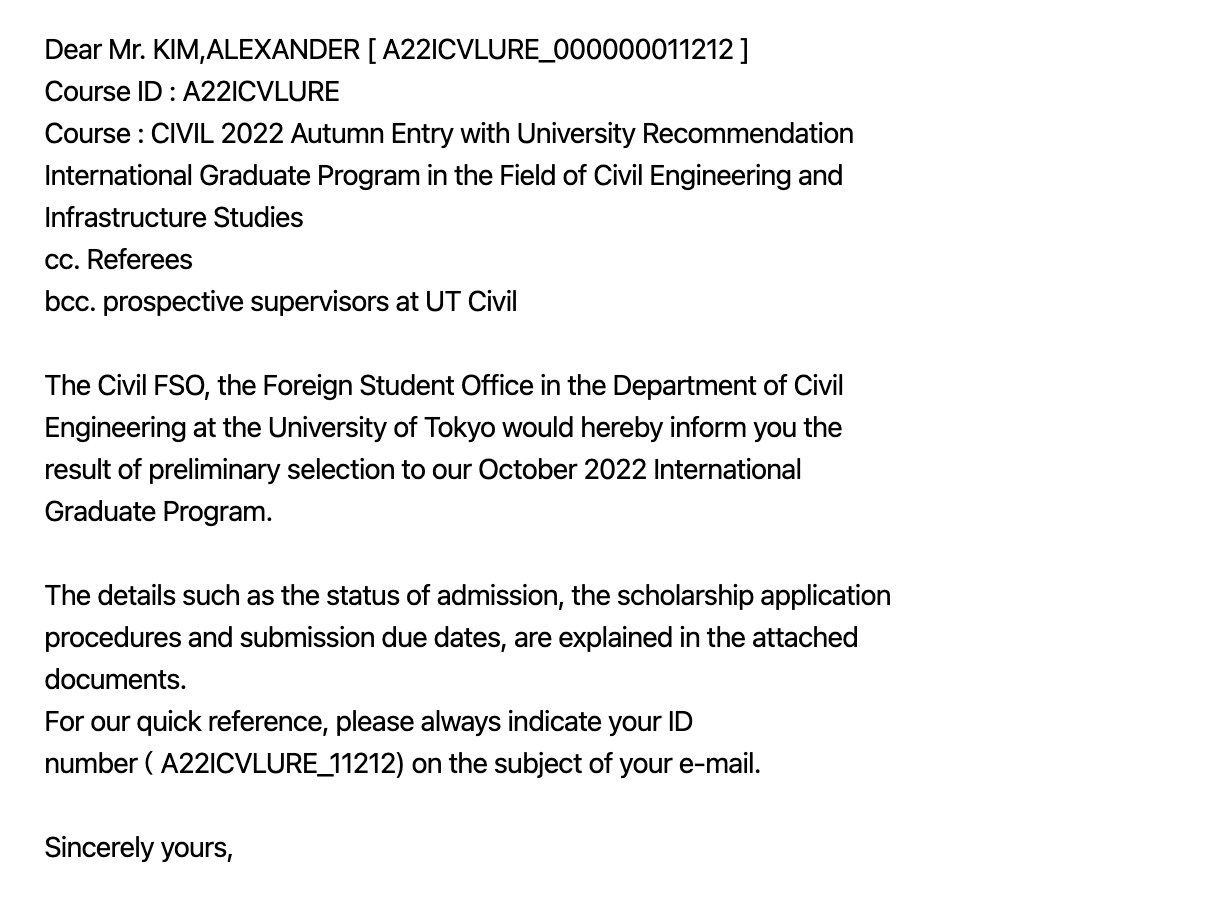
Japanese bureaucracy made sure I knew where I was. I missed a period in one of the forms. They asked me to redo the entire document and mail it back — in a physical envelope, on official university letterhead, with a signature. That's Japan.
I applied for the MEXT scholarship through the university. The department told me that every student they'd recommended over the past ten years had received it. I liked those odds.
Summer came. Classes were supposed to start in the fall. No answer yet. The university had already enrolled me. They sent me registration forms for the dormitory. I signed up. I started selling our things in Korea — furniture, appliances, everything we wouldn't need. Looked into how to end our apartment lease. I was running out of time to do all of it.
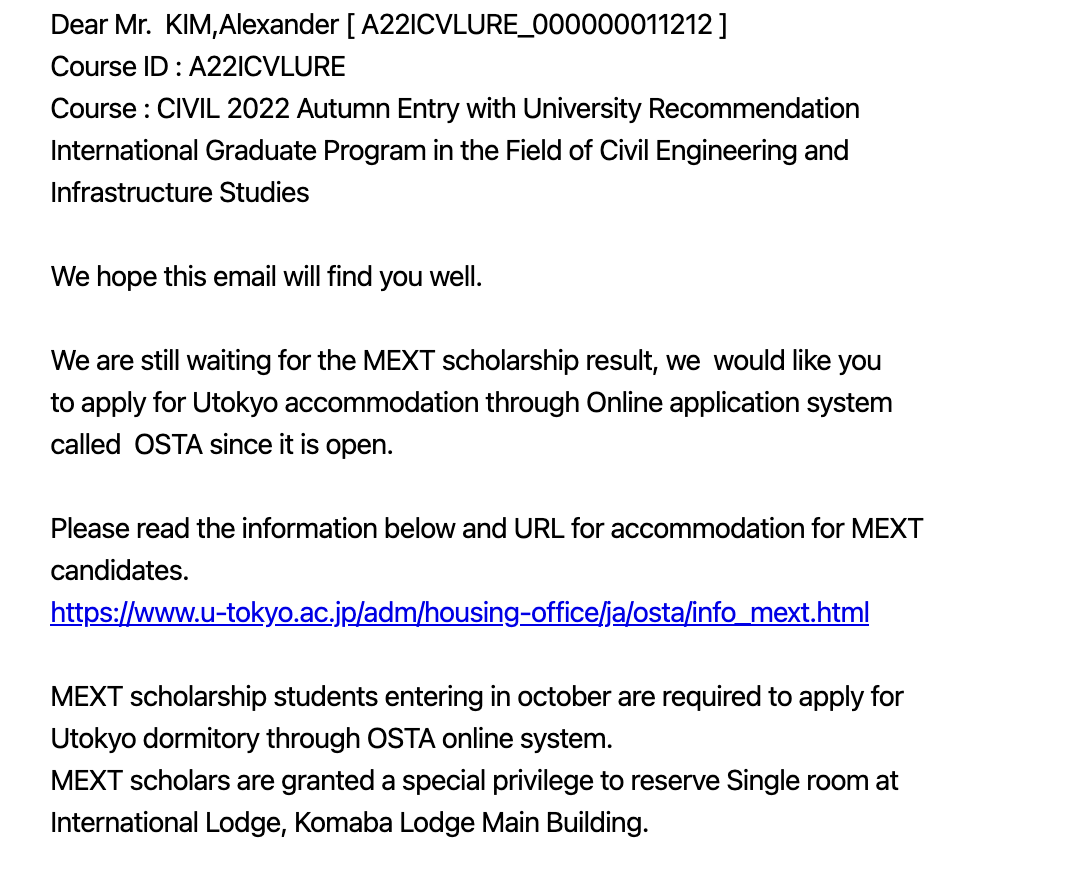
I found interesting places in Tokyo. Connected with students on the department's chat. Talked about courses, paperwork, life. In my head, I was already there.
Then the rejection came. MEXT. No explanation. Maybe 2022 had something to do with it. Maybe something else. It doesn't matter. What matters is that by the time I read that email, I'd already given up the apartment and was living in a goshiwon with two suitcases.
I read the email again and again, waiting for the line that said there had been a mistake. It never came.
So I became the first student in ten years that the university recommended and didn't get the scholarship.
In parallel, I'd been talking to a professor at NUS. He initially offered me a staff position on his team, but it turned out it was only available to enrolled students. So I applied.
Months passed with no answer, and then — an acceptance letter. One of the best universities in the world, and they said yes. I remember the feeling. I got a university email address, a student portal login, registered for an electronic visa. I started looking at apartments in Singapore, imagining weekends exploring the city.
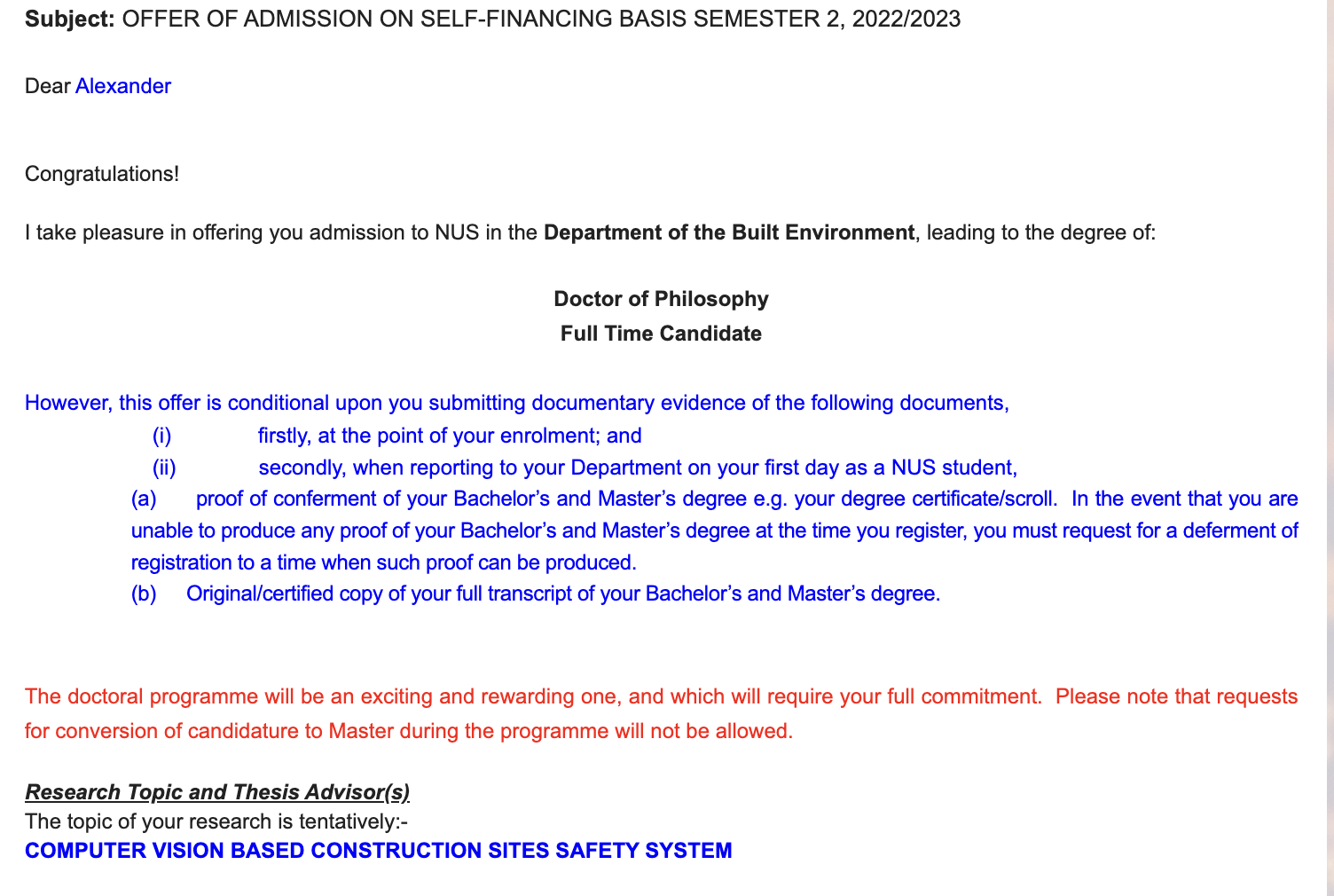
But the program I was accepted into didn't qualify for the tuition loan I was counting on. No scholarship either. The cost of tuition plus living in Singapore was more than I could carry. There was no way to make the numbers work.
They took the email address back.
Tokyo collapsed because of selection. Singapore collapsed because of math.
That year — the year of waiting — is hard to describe to someone who hasn't lived it. Twelve months of filling out forms, checking inboxes, imagining futures. Two acceptances. Two collapses.
It also left me with a rule I still carry: until the very last confirmation, nothing is real. Not a visa approval, not dorm registration, not even an acceptance letter.
By the end of it, my wife had left for Japan on a PhD exchange program. I stayed behind. Alone, in a tiny goshiwon, in winter. I quit my office job and went back to factory work. Twelve-hour shifts. The first bus at five in the morning — packed so tight you couldn't move because everyone was trying to make the same shift. Then a forty-minute walk from the last stop to the factory, through the cold, past empty roads that public transit didn't bother reaching. Somewhere along the way there was a convenience store that was open all night. I'd step inside to warm up, stand there for a minute, then keep walking.
The goshiwon had almost no heating. I slept fully dressed — jacket, hat, everything. It didn't bother me the way it should have.
It felt like everything had reset. Like I was back to the version of myself that had first arrived in Korea — no plan, no money, just cold mornings and a bus to catch.
A few years have passed since then. I didn't go back to academia — I went back to code. I started with whatever contracts I could find, moved into healthcare IT, and ended up building medical imaging systems. Somewhere in that process the work became interesting in its own right, not just a detour. I'm a senior developer now. I've built things I'm proud of.
And I still think about it.
Not every day. But often enough. The what-ifs don't go away just because you build a career on top of them. Sometimes I look at where I am and think: what if I'd gotten that scholarship? What if the loan had worked? Would I be a researcher now? Would I be happier? Would I be worse off? There's no way to know.
Lately I've been thinking about trying again. Not civil engineering this time — after years in healthcare, biomedical engineering feels more honest. More me.
But almost everyone I know who did a PhD tells me not to. My wife is one of them — she's doing it herself, and her advice is simple: don't. I've watched friends burn out, transfer abroad, or quit halfway through. Five years as a student again, no real salary, dependent on one person's approval, and at the end — no guarantee of anything.
Maybe the version of me that wanted it was younger and didn't know what he was trading.
But I haven't decided. Not yet. And I'm not sure I will.
If I try again, it won't be for an acceptance letter. It will be for the work itself and the life around it.
Some doors close and you move on. Others close and you keep checking the handle.
If any of this resonates — LinkedIn.